
 By Dgmnews Team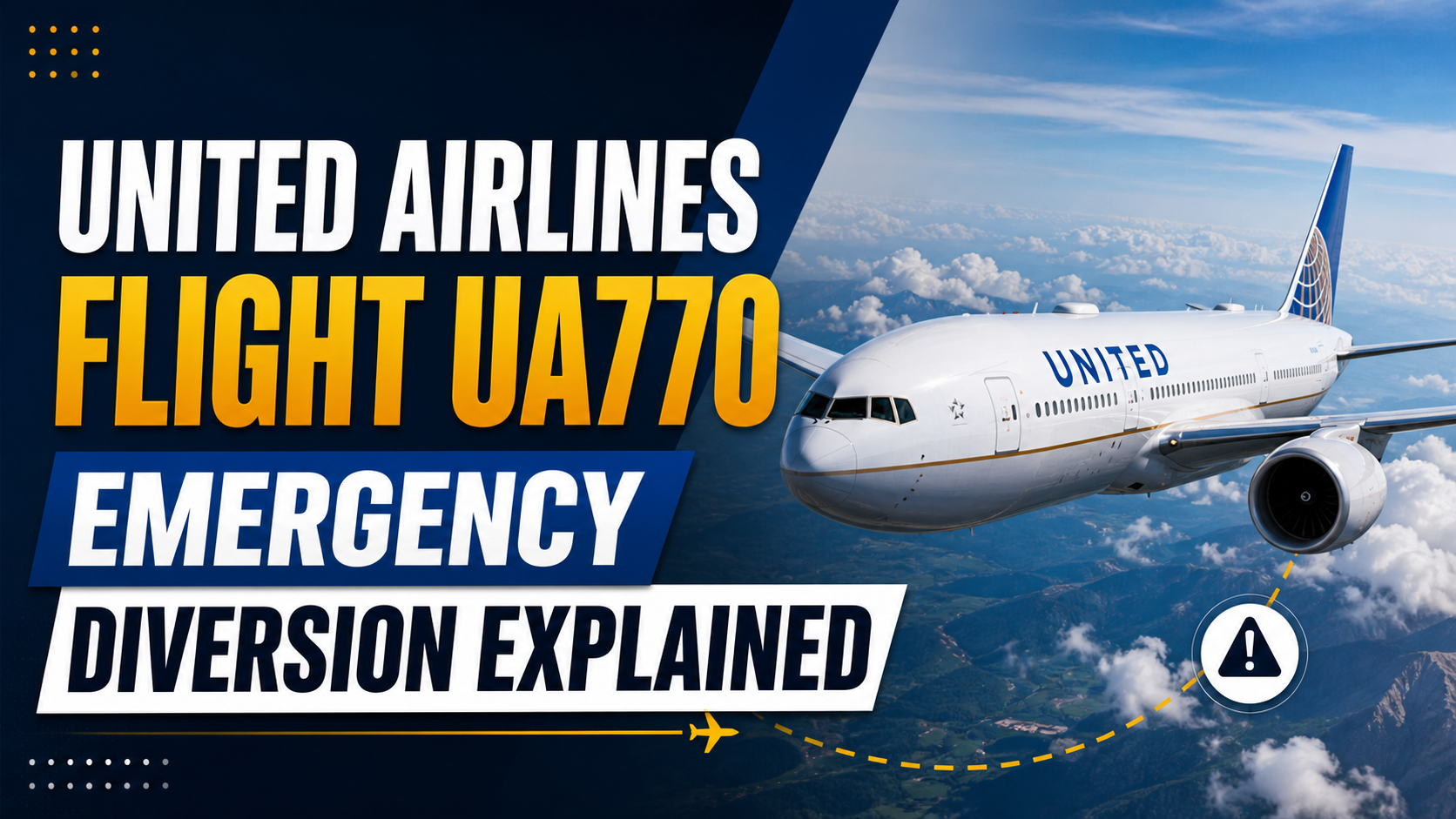
Introduction to United Airlines Flight UA770 Emergency Diversion
At cruising altitude, even a small issue can quickly become a serious situation. That’s why incidents like the emergency diversion of United Airlines flight UA770 capture immediate attention. While air travel is statistically one of the safest modes of transportation, unexpected events still occur—and how they are handled makes all the difference.
In this article, I break down what likely happened during the emergency diversion of United Airlines flight UA770, explore the common reasons behind such decisions, and reveal what goes on behind the scenes to ensure passenger safety at every step.
What Is an Emergency Diversion?
An emergency diversion occurs when an aircraft changes its planned route and lands at an alternate airport due to an urgent situation. These decisions are never taken lightly and are always guided by strict aviation safety protocols.
In the case of the United Airlines flight UA770 emergency diversion, the crew would have assessed the situation in real time and determined that landing at the nearest suitable airport was the safest course of action.
Emergency diversions can happen due to:
- Medical emergencies onboard
- Mechanical or technical malfunctions
- Security-related concerns
- Severe or unexpected weather conditions
Timeline of the United Airlines Flight UA770 Emergency Diversion
Although exact details may vary depending on reports, most emergency diversions—including the United Airlines flight UA770 emergency diversion—follow a structured and disciplined process.
The sequence typically looks like this:
- The flight departs normally and reaches cruising altitude
- An issue is detected by crew or onboard systems
- Pilots assess the severity using established protocols
- Air traffic control is notified immediately
- A diversion airport is selected based on proximity and capability
- Cabin crew prepare passengers for landing
- The aircraft lands safely at the alternate location
This structured response ensures that even in high-pressure situations, decisions remain calm, calculated, and safety-driven.
Common Reasons Behind Emergency Diversions
The United Airlines flight UA770 emergency diversion likely stemmed from one of several well-known triggers in aviation:
1. Medical Emergencies
One of the most frequent causes. If a passenger or crew member requires urgent medical care, immediate landing becomes the top priority.
2. Technical or Mechanical Issues
Even minor system irregularities are taken seriously. Pilots are trained to act early rather than risk escalation.
3. Security Concerns
Unusual passenger behavior or potential threats can lead to precautionary landings.
4. Weather Disruptions
Sudden storms or unsafe landing conditions at the destination may force rerouting.
In every scenario, safety outweighs schedules, costs, and convenience.
How the Crew Handles an Emergency Diversion
Behind every successful emergency diversion is a highly trained team working in sync. During the United Airlines flight UA770 emergency diversion, the crew would have followed strict procedures, including:
- Executing emergency checklists with precision
- Dividing responsibilities between captain and first officer
- Keeping constant communication with air traffic control
- Coordinating with ground emergency services
- Ensuring passengers remain calm and informed
Flight crews undergo rigorous simulation training to prepare for exactly these kinds of situations.
What Passengers Typically Experience
For passengers, an emergency diversion can feel unsettling—but it’s also a moment where airline professionalism truly stands out.
Passengers on UA770 likely experienced:
- Calm but clear announcements from the cockpit
- Cabin crew securing the cabin for landing
- A noticeable change in flight path or descent speed
- Instructions upon landing at the alternate airport
While the situation may feel tense, every step is designed to maintain order and minimize risk.
Communication With Families and Media
Following events like the United Airlines flight UA770 emergency diversion, airline communication teams act quickly. Their role is to provide timely and accurate updates to:
- Passenger families
- Media outlets
- Aviation authorities
Transparency is key, though verified information is released carefully to avoid confusion or misinformation.
Aftermath and Investigation
Once the aircraft has landed safely, a detailed review process begins. United Airlines—and aviation regulators—analyze:
- The root cause of the diversion
- Crew response and decision-making
- System performance and safety protocols
Passengers are typically assisted with rebooking, accommodations, and onward travel arrangements.
Key Lessons From United Airlines Flight UA770 Emergency Diversion
Every incident like the United Airlines flight UA770 emergency diversion offers valuable insights:
- Aviation safety systems are highly robust
- Crew training is designed for real-world unpredictability
- Early decision-making prevents larger risks
- Passenger safety is always the top priority
Conclusion
The United Airlines flight UA770 emergency diversion is a strong reminder of how complex and well-coordinated modern aviation truly is. While diversions can be inconvenient, they are a clear sign that safety protocols are working exactly as intended.
For passengers, understanding these situations builds trust. Because when something unexpected happens at 35,000 feet, a global network of trained professionals is already in motion—working to bring everyone safely back to the ground.