
 By Dgmnews Team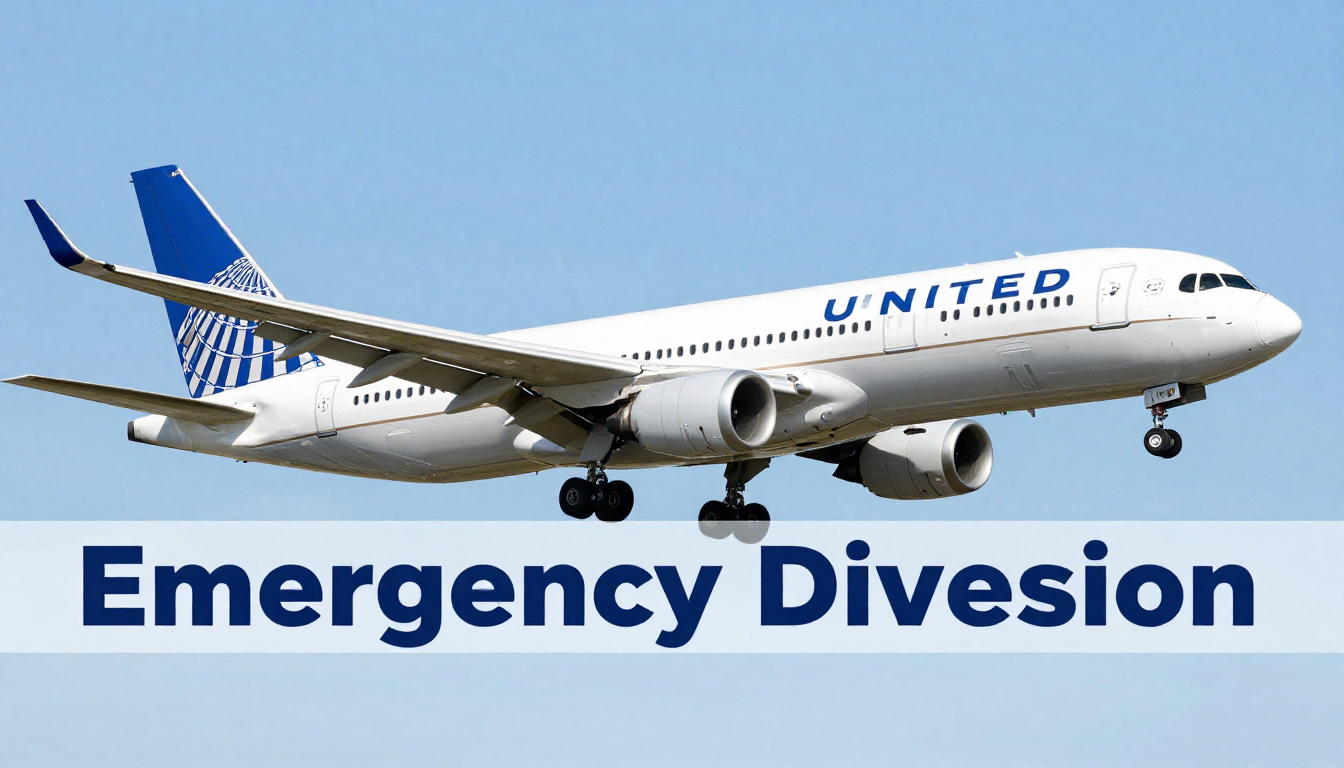
United Airlines Flight UA770, operating on a long-haul international route, made headlines following an emergency diversion that raised questions among travelers and aviation observers alike. The incident highlights how modern aviation safety systems, crew training, and international coordination work together to manage in-flight irregularities effectively. This article offers a clear, factual, and professional overview of the UA770 emergency diversion, explaining what happened, why the decision was made, and its implications for passenger safety.
United Airlines Flight UA770 was scheduled to operate from Barcelona El Prat Airport (BCN) to Chicago O’Hare International Airport (ORD). The flight was operated using a Boeing 787-9 Dreamliner, a wide-body aircraft renowned for its advanced avionics, fuel efficiency, and long-range capabilities. With several hours remaining in the transatlantic journey, the aircraft was cruising normally when the flight crew identified a technical concern that required immediate attention.
While flying over European airspace, the cockpit crew received alerts indicating a potential cabin pressurization issue. Although there was no explosive decompression or visible emergency in the passenger cabin, pressurization irregularities are treated with the highest level of caution in aviation. Cabin pressurization systems are essential for maintaining a safe and comfortable environment at high altitudes, and any abnormal readings prompt standard emergency procedures.
In response, the pilots followed established safety protocols and declared an emergency by transmitting the internationally recognized Squawk 7700 transponder code. This code signals air traffic control that an aircraft is experiencing a general emergency and requires immediate priority handling.
After evaluating the situation, the flight crew determined that a precautionary diversion was the safest course of action. London Heathrow Airport (LHR) was selected due to its proximity, extensive emergency response capabilities, and ability to accommodate large wide-body aircraft at short notice.
Air traffic controllers coordinated a priority approach, allowing UA770 to descend and land without delay. The aircraft landed safely on a designated runway and taxied to the gate, where emergency services and maintenance teams were already positioned as part of standard safety procedures.
Importantly, no injuries were reported among passengers or crew members. The cabin crew maintained communication with passengers throughout the diversion, providing instructions and reassurance. Once on the ground, passengers were assisted by United Airlines staff in accordance with the airline’s disruption and care policies.
Such diversions, while inconvenient, are designed to minimize risk. From a safety perspective, choosing to land early rather than continue a long over-water flight reflects conservative decision-making aligned with global aviation best practices.
Following the landing, the Boeing 787-9 was removed from service for a thorough technical inspection. Engineering teams examined the pressurization system to identify the root cause of the alert. United Airlines emphasized that safety remains its top priority and that emergency diversions, though rare, are a normal part of airline operations when system anomalies are detected.
Airlines routinely train flight crews to respond decisively to such situations, and the handling of Flight UA770 demonstrates adherence to those standards.
Emergency diversions are not necessarily indicators of severe danger but rather evidence of preventive safety culture in aviation. Modern aircraft are equipped with sensors that detect even minor irregularities. When these systems trigger warnings, pilots are trained to err on the side of caution.
Cabin pressurization concerns, in particular, are taken seriously because unresolved issues at cruising altitude could pose health risks. By diverting to a nearby major airport, the flight crew ensured that passengers were not exposed to unnecessary risk during the remainder of the journey.
For international flights involving European airports, passenger care obligations are often governed by EU aviation regulations, which require airlines to provide assistance such as meals, accommodation, and rebooking in the event of significant delays caused by technical issues. United Airlines worked to re-accommodate passengers on alternative flights to their final destination as quickly as operationally possible.
The emergency diversion of United Airlines Flight UA770 serves as a clear example of aviation safety systems functioning as intended. From early detection of a technical anomaly to swift coordination with air traffic control and a safe landing at a major international hub, each step reflected industry best practices.
While disruptions of this nature can be frustrating for travelers, they underscore a fundamental truth about commercial aviation: safety always comes first. The UA770 incident demonstrates how proactive decision-making and global aviation infrastructure help ensure that even unexpected situations are resolved safely and professionally.